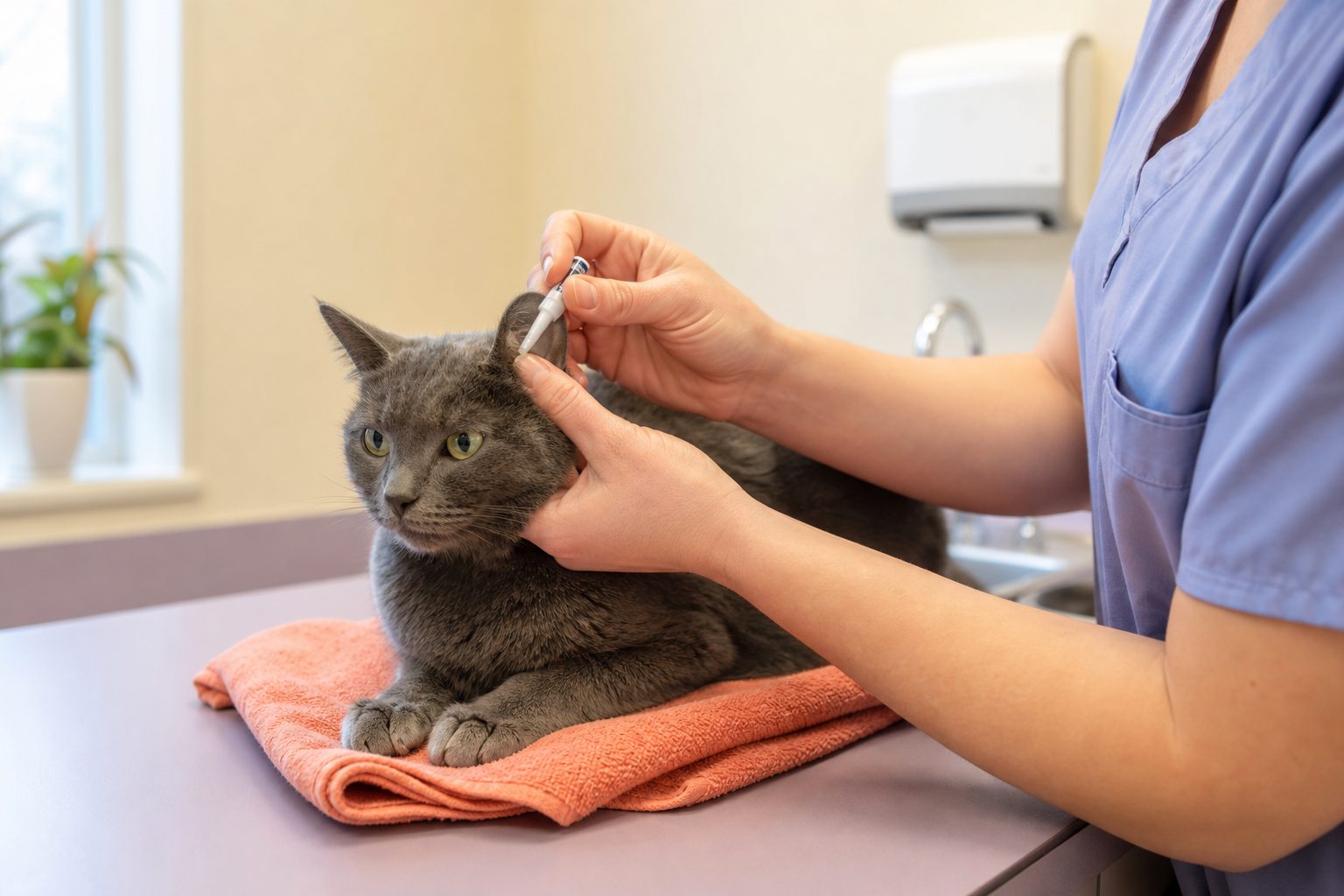
Why cats on methimazole and dogs on levothyroxine end up needing a compounder
Some feline and canine patients simply do not fit the mold set by approved thyroid medications. Cats with hyperthyroidism often refuse to take methimazole tablets, or cannot tolerate the gastrointestinal side effects. Transdermal methimazole, applied to the ear, provides a practical solution for many owners and their cats. Yet there is no FDA-approved transdermal formulation, so compounding is the only route.
On the canine side, commercially available levothyroxine tablets do not always meet every patient's needs. Dogs with allergies to fillers, those needing unique dosing increments, or those requiring a liquid or chewable form may need a custom-made product. Compounded levothyroxine allows tailored strengths and forms not available from standard manufacturers.
Both situations put clinics in a position where a compounded medication is not just a convenience but a necessity. However, compounding these drugs comes with regulatory scrutiny, especially since thyroid medications are specifically mentioned under FDA rules. Understanding those rules is critical before placing an order with your pharmacy or outsourcing facility.
Keep reading: What the VCPR Requires Before You Authorize a Refill
Patient specific prescriptions versus office stock under GFI 256
The FDA's Guidance for Industry #256 (GFI 256) draws a firm line between prescriptions written for a specific patient and bulk medications kept on hand as office stock. Under GFI 256, compounding animal drugs from bulk ingredients is only permitted by pharmacies for individual, identified patient prescriptions, not for stockpiling in the clinic.
This distinction matters most when you treat a number of patients with the same condition. For example, a practice might have several hyperthyroid cats on transdermal methimazole. You cannot order a jar of compounded methimazole to keep in your fridge for dispensing at will. Each batch must be linked to a patient-specific prescription, with patient and owner details included.
In contrast, some medications can be ordered as office stock through registered outsourcing facilities, but thyroid drugs are not generally included in this allowance. The FDA's rationale is that there are approved products for both methimazole and levothyroxine, even if those do not meet every patient's needs. This makes it especially important to document your justification for compounding and to order only what is appropriate for each patient.
503A pharmacies and 503B outsourcing facilities: which one can ship you stock
Understanding the difference between 503A compounding pharmacies and 503B outsourcing facilities is crucial when ordering compounded thyroid medications. A 503A pharmacy is a traditional compounding pharmacy. It may only compound medications pursuant to a valid prescription for an identified individual animal. These prescriptions must be patient-specific. 503A pharmacies cannot provide bulk office stock compounded from bulk drug substances for animal use.
503B outsourcing facilities, on the other hand, are FDA-registered entities that may compound medications in advance of receiving prescriptions. Some 503B facilities can provide office stock to clinics, but this is limited by drug type and must comply with FDA rules. As of now, compounded methimazole and levothyroxine for animals are not permitted for office stock from either 503A pharmacies or 503B outsourcing facilities. Any compounded thyroid medication must be linked to an individual patient.
Some clinics attempt to work around these restrictions by writing multiple prescriptions in advance. This can place a practice at risk. Both federal and state regulators may view batch prescribing without a medical need as a violation. Always ensure that each compounded prescription is based on a valid practitioner-patient relationship and a documented clinical need.
Keep reading: In House Pharmacy, Online Partner, or Written Script: Margin Compared
What must appear on the prescription you send to the compounder
When you write a prescription for a compounded thyroid medication, the details matter. Pharmacies are required to collect and record all information that confirms the prescription is for a specific patient. Missing or incomplete information can result in delays, or worse, regulatory trouble for both your clinic and the pharmacy.
Essential elements of a valid prescription
- Patient's species, name, and identifying information (such as breed, sex, and weight)
- Owner's name and address
- Drug name, strength, dosage form, and quantity to be dispensed
- Directions for use, including dose, route, and frequency
- Prescriber's name, signature, clinic address, and contact information
- Date prescription written
- Any special compounding instructions (such as flavor, base, or concentration)
Include specific directions on how the compounded medication is to be used. For transdermal methimazole, note the targeted dose in milligrams per application and the total number of doses to be dispensed. For levothyroxine, provide the exact strength required, especially if the animal needs a non-standard dose or form.
Pharmacies may also request a clinical justification for compounding, especially if they are subject to regular FDA or state audits. This can be as simple as a note that the patient cannot tolerate the commercial product, needs a non-standard dosage, or requires a different form for compliance.
Transdermal methimazole: dosing forms, beyond use dating, and storage
Transdermal methimazole is most often dispensed in a pluronic lecithin organogel (PLO) base. Pharmacy options include prefilled syringes, click pens, or jars with dosing spoons. Typical strengths are 2.5 or 5 mg per 0.1 ml, but concentrations can be adjusted for smaller or larger cats or to simplify dosing instructions for owners.
Beyond use dating for transdermals
BUD, or beyond use date, is the date after which the compounded product should not be used. For methimazole in PLO gel, the beyond use date is set by the pharmacy according to USP guidelines and the stability of the formulation. This is usually between 30 and 90 days from the date the product is made, but it can vary. Always check the label and advise owners to use the product within this timeframe.
Storage considerations
Transdermal methimazole should be stored at room temperature, away from direct sunlight and heat. Some compounded forms may require refrigeration, so review the storage requirements with the compounding pharmacy before dispensing. If syringes or pens are used, remind owners to keep them capped and out of reach of children and pets.
See how WhiskerRefill handles this for veterinary medicine
When an approved product exists and compounding is still defensible
Federal law does not allow compounding from bulk drug ingredients if there is an approved, commercially available product that can meet the patient's needs. Both methimazole and levothyroxine have FDA-approved tablet forms for cats and dogs. However, not all patients can take the approved product, or they may need a different dosage form or strength.
Compounding is defensible, and permissible, when there is a documented clinical reason. For instance, a cat who cannot be pilled, a dog with allergies to tablet excipients, or a patient needing a formulation that is not available from the manufacturer. The FDA refers to this as "clinical difference." The prescriber should document why the compounded product is necessary and why the commercial version is not appropriate for that animal.
If you are compounding for reasons of convenience or cost, without a clinical justification, both the clinic and the pharmacy are at risk. State boards and the FDA expect clear documentation in the medical record supporting the decision to use a compounded medication. This is particularly important for thyroid drugs, given their strict regulatory status.
Documenting failed attempts at using approved medications, reporting adverse reactions, or explaining why the standard strengths do not fit the patient's dosing needs can all help defend the choice to compound. Keep copies of client communications and medical notes related to these cases.
Recordkeeping your state board will ask to see
State boards of pharmacy and veterinary medicine both have the authority to audit your records. They may ask to see proof that every compounded thyroid prescription was written for a specific patient, and that your clinic followed state and federal law. Thorough, organized records are your best defense in the event of an inspection or complaint.
Key records to maintain
- Original prescription requests with all patient, owner, and prescriber information
- Documentation of clinical need for compounding, including notes on failed use of approved products
- Dispensing logs for compounded products, including lot numbers and expiration dates
- Invoices or order confirmations from the compounding pharmacy
- Copies of client communications about medication instructions and potential side effects
- Records of returned or discarded compounded medications
Many clinics use practice management software to track medication orders and patient records. However, these systems may not capture all the information required for compounded medications. Consider maintaining a separate log or binder for compounded drugs, especially those subject to increased scrutiny like methimazole and levothyroxine.
Some states require additional reporting or prior approval to use compounded medications. Check your state's regulations and be prepared to provide documentation during audits. Timely, organized recordkeeping can make the difference between a smooth inspection and a regulatory headache.
As refill requests and compliance reminders become more important to patient care, clinics have turned to digital tools that handle prescription due tracking, owner reminders, and in-clinic refill request queues. These systems can help ensure that every compounded medication order is properly documented and tracked, reducing risk and improving compliance with GFI 256.